How to Build a Multi-Channel B2B Marketing Strategy

Written by: Sanjeev Arora
Imagine this: a growing B2B company invests in a few digital ads, posts on LinkedIn occasionally, and sends out a monthly email. Yet, growth is flat. Leads trickle in inconsistently, and the sales team feels the pressure. The problem isn’t effort—it’s alignment. In today’s complex buyer landscape, success demands a multi-channel B2B marketing strategy that connects every touchpoint into one cohesive journey.
A multi-channel strategy isn’t just about being everywhere—it’s about being strategically present where your audience learns, compares, and buys. In this guide, we’ll break down how to build such a strategy step-by-step, why it drives measurable ROI, and how partnering with experts like Fractional CMO Partners can accelerate that success.
Why Multi-Channel Marketing Matters in B2B
According to HubSpot’s 2024 State of Marketing Report, 76% of B2B buyers engage with at least three channels before making a purchase decision. That’s not surprising—today’s decision-makers are digital-first, informed, and cautious. They might find your brand through LinkedIn, read your whitepaper via email, and finally talk to sales after watching a product webinar.
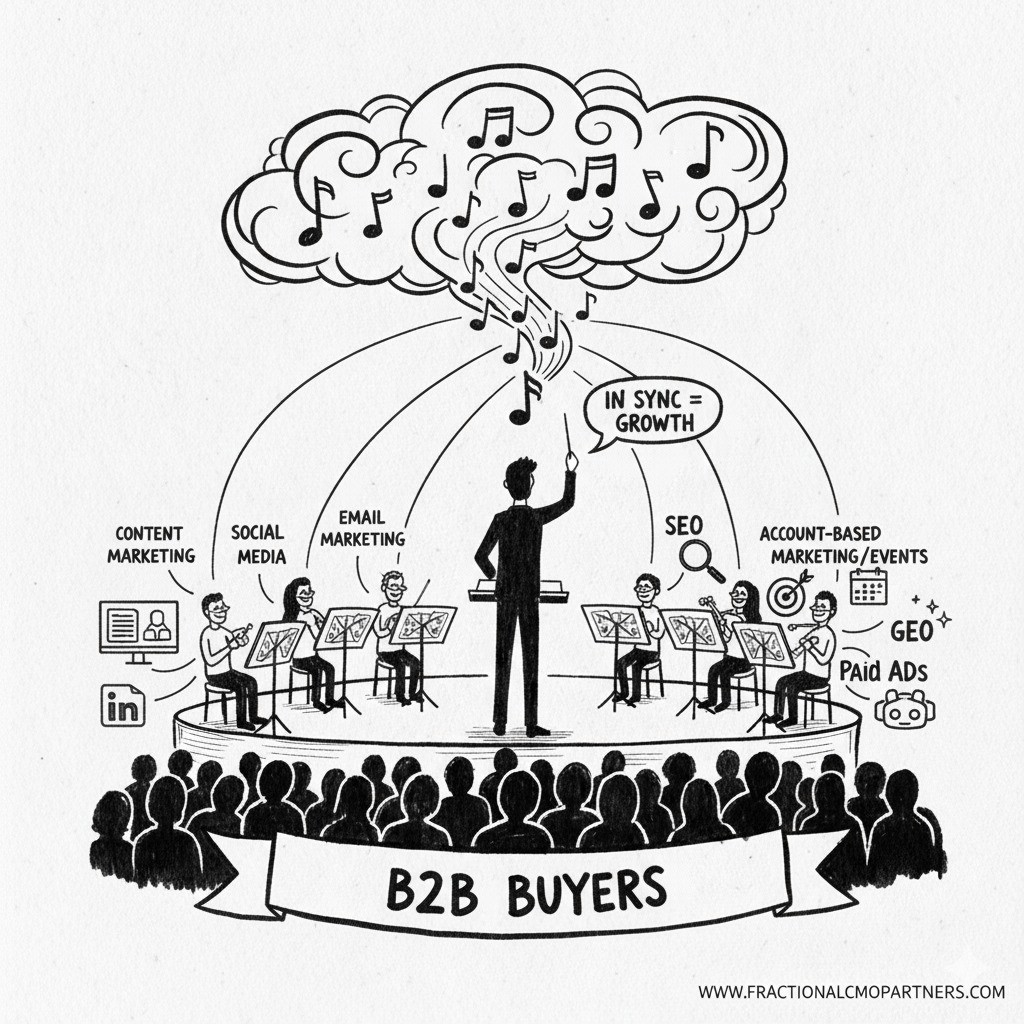
By aligning channels—content, email, paid ads, SEO, social, and events—you create a seamless, trustworthy experience that shortens sales cycles and strengthens your brand authority.
Step 1: Understand Your Audience and Buyer Journey
Every successful B2B marketing strategy starts with deep audience insight. Map out who your ideal customers are, what challenges they face, and how they consume information.
Ask:
Where do they research solutions—LinkedIn, webinars, AI chatbots, search engines, or Listing and industry websites?
What are their biggest pain points?
Who is the decision maker, influencer, buyer group and how long is their buying cycle?
When you identify these insights, you can create relevant messaging for every stage—from awareness to decision.
Step 2: Set Clear and Measurable Goals
Before you launch campaigns, define what success looks like. Is it more qualified leads? Better brand visibility? Faster sales conversions?
Set SMART goals (Specific, Measurable, Achievable, Relevant, Time-bound). For instance:
Increase MQLs by 25% in six months.
Grow LinkedIn engagement by 40% in a quarter.
Improve email conversion rates by 15%.
These goals guide your channel selection and help you measure impact—something crucial when calculating The ROI of a Fractional CMO.
Step 3: Choose the Right Channels
Multi-channel doesn’t mean “every channel.” It means selecting the ones that align with your buyer behavior. Here’s a proven framework:
Content Marketing: Publish SEO-rich blogs, whitepapers, and guides that educate prospects.
Email Marketing: Nurture leads with personalized drip campaigns, offering value in every message.
Social Media: Use LinkedIn and Twitter to share thought leadership and engage in industry discussions.
Paid Advertising: Leverage Google Ads or LinkedIn Ads for targeted awareness.
Events & Webinars: Offer value through learning experiences.
SEO: Build organic visibility with keyword-focused content and backlinks.
Generative Engine Optimization (GEO): Optimize your content for engines like ChatGPT, Perplexity, and Gemini by using clear question-answer formats, citations, statistics, and structured data—ensuring your brand appears in AI-generated responses.
According to Demand Gen Report (2023), 62% of B2B buyers say they rely more on digital content now than they did a year ago—a sign that content and engagement-driven channels are more vital than ever.
Step 4: Create Consistent Messaging Across Channels
Your messaging must feel unified whether a prospect reads your blog, sees your ad, or joins your webinar. Create a brand voice that’s informative, trustworthy, and consistent. Develop a content calendar to align themes and campaign timing across platforms.
This is where experienced marketing leadership makes a difference. As explained in Fractional CMO Responsibilities, a fractional CMO ensures that every channel works in harmony with the brand’s goals, voice, and metrics.
Step 5: Align Sales and Marketing Teams
In B2B marketing, alignment between marketing and sales isn’t optional—it’s critical. A study by LinkedIn’s B2B Institute found that organizations with aligned sales and marketing see 208% higher marketing revenue than those without alignment.
Create shared dashboards, joint campaign planning sessions, and feedback loops. When sales and marketing operate from the same data and goals, your entire funnel becomes more predictable and efficient.
Step 6: Measure, Optimize, and Scale
Multi-channel marketing is dynamic. Analyze performance across channels—track metrics like lead sources, engagement rates, and cost per acquisition. Use tools like HubSpot, Google Analytics, or Salesforce to identify what’s working and what’s not.
Once you see traction, scale intelligently—repurpose high-performing content, expand ad-spend strategically, and continuously refine messaging.
For many growing B2B companies, this level of strategic insight and coordination is where partnering with one of the Best Fractional CMO Companies becomes a growth multiplier.
Step 7: Integrate Technology and Automation
Automation tools can help you manage complex multi-channel workflows. From CRM systems to AI-driven content schedulers, technology amplifies consistency and personalization. Ensure your tech stack integrates smoothly across channels for unified reporting and tracking.
Step 8: Review and Realign Quarterly
Markets evolve, and so should your strategy. Review performance every quarter to adjust your channel mix, update personas, and optimize content. Staying agile ensures your campaigns reflect real-time market behavior.
If you’re unsure whether your marketing structure is scalable or fragmented, it’s worth exploring Fractional CMO vs. Marketing Agency to understand which approach best fits your business stage and goals.
Ready to Build a Smarter Multi-Channel Strategy?
Building a cohesive B2B marketing engine takes vision, alignment, and strategic leadership. If your team is stretched thin or lacks strategic direction, Fractional CMO Partners can help you craft and execute a multi-channel strategy that delivers measurable growth.
Let’s create your next growth story—connect with Fractional CMO Partners today.
FAQs
Q1. What is a multi-channel B2B marketing strategy?
It’s an approach that uses multiple digital and offline platforms to engage B2B buyers across their journey, ensuring consistent messaging and higher conversion rates.
Q2. Why is it important for B2B companies?
It increases reach, improves lead quality, and builds stronger brand trust across decision-makers.
Q3. How many channels should I use?
Focus on 3–5 channels that best align with your audience behavior and your internal capacity.
Q4. How do I measure ROI?
Track leads, engagement, and revenue attributed to each channel using analytics tools or with help from a Fractional CMO.
Q5. Can small B2B businesses implement multi-channel strategies?
Yes, even small teams can manage multi-channel campaigns efficiently with the right planning and automation.
Q6. What’s the role of a Fractional CMO in this process?
They design and oversee marketing strategies, align teams, and ensure ROI-focused execution.
Q7. How often should I update my strategy?
At least every quarter to adapt to changing audience behaviors or market shifts.
Q8. What’s the best way to start building one?
Start by understanding your audience deeply, set measurable goals, and then expand one channel at a time.