Demand Generation Marketing: The Hidden Engine Behind Scalable B2B Growth

Written by: Sanjeev Arora
Imagine two B2B SaaS startups.
Both have great products. Both invest in ads. Yet, one becomes a category leader while the other struggles to get noticed.
The difference?
The winner didn’t just generate leads — it generated demand.
Welcome to the world of demand generation marketing, where you don’t chase buyers — you attract them, educate them, and earn their trust long before they ever fill out a form.
What Is Demand Generation Marketing?
At its core, demand generation marketing is about creating desire for your product or service before your audience even knows they need it.
It’s not lead generation — it’s the ecosystem that makes leads possible.
Think of it as nurturing curiosity and building authority. You’re not asking people to buy; you’re helping them believe.
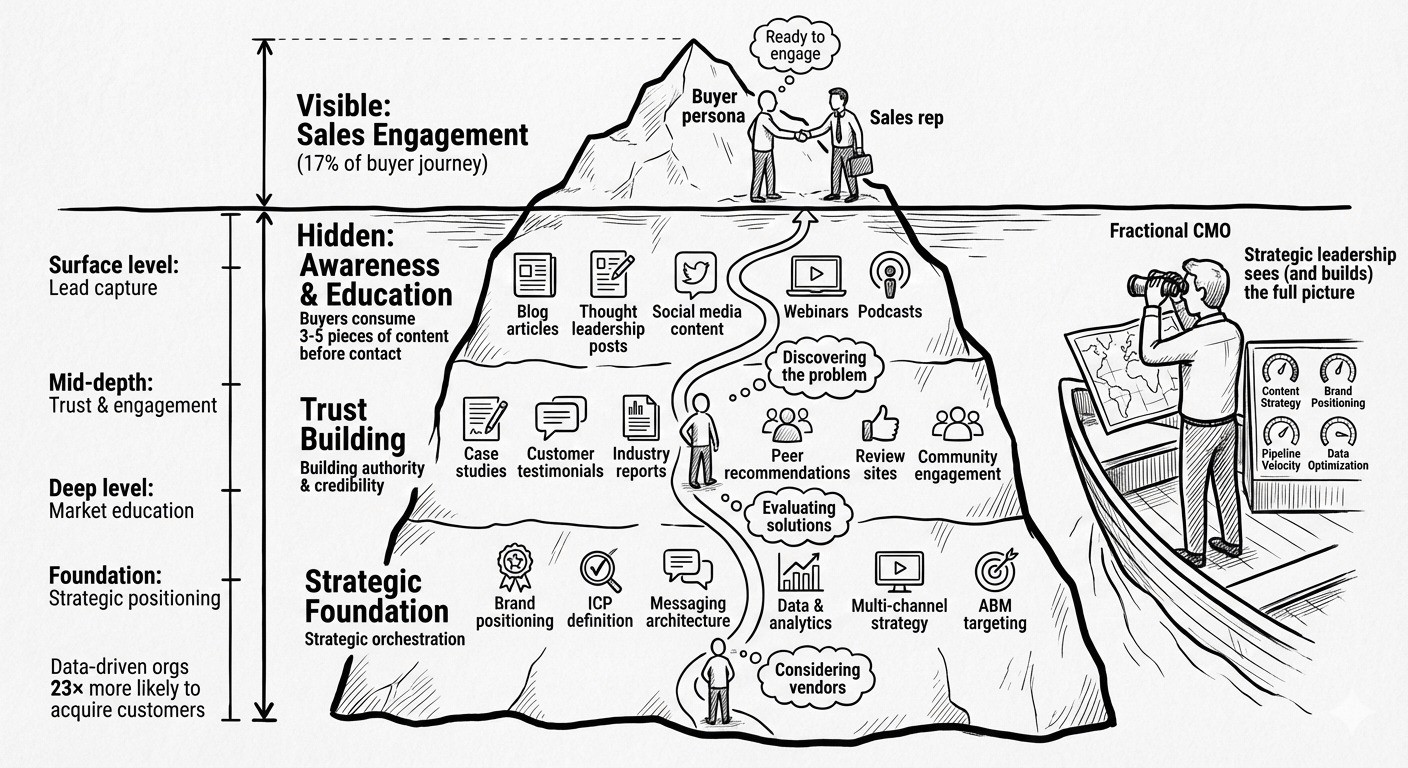
According to Gartner, today’s B2B buyers spend only 17% of their time talking to sales reps. That means 83% of the buying decision would happen elsewhere — on your website, in your content, and across digital conversations you might not even see.
That’s why smart marketers focus on generating demand early — because by the time a buyer raises their hand, their mind is mostly made up.
Why Demand Generation Matters More Than Ever
The modern buyer’s journey isn’t linear. It’s a web of touchpoints — social media, communities, peer recommendations, review platforms, and thought-leadership content.
82% of B2B buyers viewed at least five pieces of content from the winning vendor before making a purchase decision. That’s not random engagement — it’s trust-building in action.
Brands that consistently show up with value, not just offers, become the ones buyers remember when the need arises.
The Core Pillars of Demand Generation Marketing
Demand generation isn’t one big campaign — it’s an engine built from many moving parts. Let’s look at the key components driving it.
1. Strategic Storytelling and Brand Positioning
Every great demand engine starts with a story.
Your narrative shapes how people perceive your product — whether it’s a nice-to-have or a need-to-have.
Many companies partner with a fractional CMO agency to uncover that story and translate it into consistent brand positioning. A fractional CMO helps align messaging across teams, ensuring your audience hears one clear voice — credible, empathetic, and authoritative.
2. Content That Educates and Engages
In demand generation, content is your currency. But the goal isn’t volume — it’s value.
Think of your content as a digital handshake. It’s where trust begins. Webinars, case studies, and even short LinkedIn posts can turn passive audiences into active listeners.
The best brands avoid over-gating and focus on “teaching, not selling.” They share insights that genuinely help their audience — because generosity builds authority faster than any ad ever could.
3. Multi-Channel Growth and ABM Integration
Demand thrives when your message appears where your audience already spends time — not where you wish they were.
This is where Account-Based Marketing (ABM) meets personalization.
By aligning sales and marketing under a unified strategy, companies can target high-intent accounts with precision.
Many B2B leaders choose to hire fractional CMOs who specialize in designing ABM systems that balance storytelling, automation, and analytics to capture interest and convert it into pipeline momentum.
4. Data, Technology, and Continuous Optimization
Data isn’t just a metric — it’s your marketing compass.
When used well, it helps identify where prospects are engaging and what messages resonate most.
According to McKinsey Digital, data-driven organizations are 23 times more likely to acquire customers and 6 times more likely to retain them.
Demand generation thrives on that insight loop — constantly learning, testing, and optimizing for better engagement and conversion.
The Human Factor: Why Strategic Marketing Leadership Matters
Even the most advanced automation stack can’t replace human insight.
Great marketing needs orchestration — the strategic vision to connect creative ideas with commercial results.
That’s where leadership makes all the difference. With Fractional CMO Services, companies can access seasoned CMOs who’ve scaled SaaS and B2B startups without the overhead of a full-time hire.
These leaders don’t just build campaigns; they build systems — measurable, repeatable, and aligned with business outcomes.
Demand Generation for SaaS: The Flywheel of Growth
In SaaS, consistency is king.
Recurring revenue depends on continuously engaging both new prospects and existing customers.
Effective demand generation doesn’t end at acquisition — it fuels retention and expansion.
By combining lifecycle marketing, community engagement, and content education, companies create a self-sustaining flywheel that keeps momentum growing.
For founders seeking to scale efficiently, embracing B2B SaaS Growth Marketing ensures every marketing effort compounds — driving brand recall, organic growth, and long-term MRR stability.
Global Perspective: The Rise of Demand Generation in Emerging Markets
Markets like India are proving that global demand generation doesn’t require global budgets — it requires global thinking.
Through data-driven targeting and cultural nuance, startups are reaching international audiences faster than ever.
Brands leveraging fractional CMO India models combine strategic expertise with cost efficiency, helping international firms expand without overextending resources.
Measuring Success: Metrics That Matter
Demand generation isn’t guesswork — it’s measurable science.
Here are the metrics that truly define success:
Pipeline contribution – marketing’s share of revenue opportunities.
Visitor-to-lead conversion rate – how effectively your content captures intent.
Pipeline velocity – how fast qualified opportunities move toward close.
LTV:CAC ratio – ensuring long-term profitability.
Tracking these KPIs ensures you’re not just generating attention — you’re generating outcomes.
Avoiding Common Demand Gen Pitfalls
Mistaking “leads” for “demand.”
Over-gating valuable content.
Ignoring post-sale engagement.
Misaligning marketing and sales goals.
Every misstep weakens trust, and in B2B, trust is currency.
Building Your Own Demand Generation Engine
Start with a clear Ideal Customer Profile (ICP).
Create value-led, ungated assets.
Run multi-channel awareness plays.
Capture intent through SEO, ABM, and PPC.
Continuously test, measure, and refine.
The result? A demand generation engine that keeps running — long after your ads stop.
Final Thoughts: Turning Awareness into Acceleration
In a noisy digital world, demand generation marketing is your quiet power.
It’s how brands like HubSpot, Cognism, and Amazon Ads built global recognition — not through louder ads, but through smarter storytelling.
The question isn’t whether you should invest in demand generation.
It’s whether you can afford not to.
Ready to Turn Awareness into Revenue?
Partner with Fractional CMO Partners and access global marketing leaders who’ve scaled SaaS, tech, and B2B brands — from zero to multi-million-dollar pipelines.
It’s time to build a demand generation system that works while you sleep.
FAQs
Q1. What is demand generation marketing?
Demand generation marketing is a strategic approach that focuses on creating awareness, interest, and trust for a product or service before a buyer is ready to purchase. It nurtures relationships through storytelling, valuable content, and targeted campaigns — turning curiosity into qualified leads and long-term customers.
Q2. How is demand generation different from lead generation?
Lead generation focuses on collecting contact information from interested prospects, while demand generation builds brand awareness and authority to create that interest in the first place. In short, lead generation captures intent — demand generation creates it.
Q3. Why is demand generation important for B2B companies?
For B2B brands, especially in SaaS and technology, long sales cycles mean buyers spend months researching before engaging sales. A strong demand generation strategy ensures your brand stays top of mind during that journey, positioning you as the trusted choice when intent finally forms.
Q4. What are the key components of a demand generation strategy?
A successful strategy includes brand storytelling, content marketing, ABM (Account-Based Marketing), data-driven optimization, and marketing-sales alignment. Many growing companies partner with a fractional CMO agency to design and execute these pillars effectively.
Q5. How do you measure demand generation success?
Key performance indicators (KPIs) include marketing-sourced pipeline, lead-to-customer conversion rate, pipeline velocity, and the LTV:CAC ratio. The goal is not just more leads — but better-qualified demand that translates to revenue growth.
Q6. Who can help build a demand generation engine for my business?
Businesses can work with strategic marketing leaders through Fractional CMO Services. These experts bring C-suite experience and proven frameworks to help startups and scale-ups build sustainable, revenue-driven demand systems without the cost of a full-time executive.