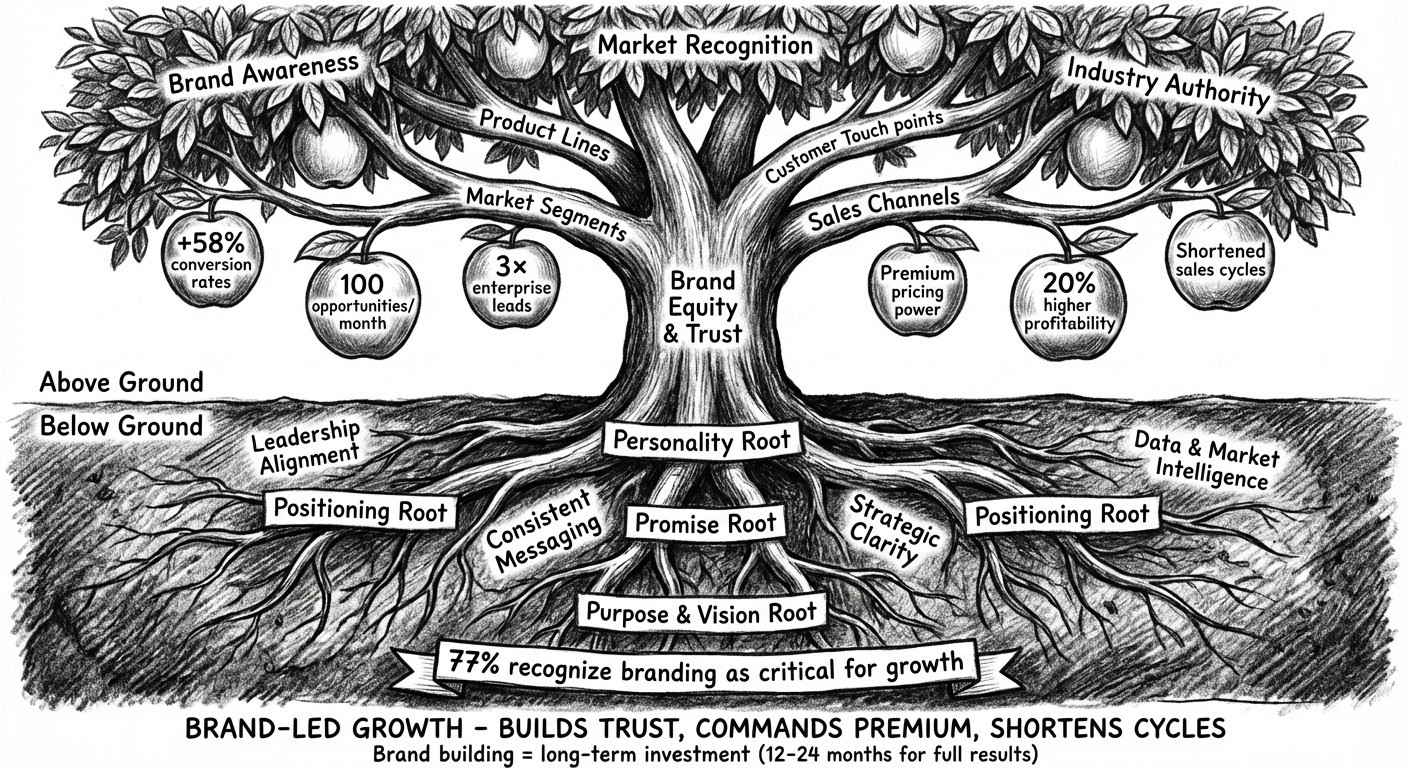
Brand Building in B2B Markets: How to Create a Brand That Drives Growth

Written by: Jayant Kshirsagar
Introduction: The Silent Power Behind Every B2B Giant
In today’s hypercompetitive B2B landscape, the strongest differentiator isn’t always technology or price—it’s brand.
Picture this: a mid-sized SaaS startup struggling to stand out among dozens of similar competitors. The moment it clarified its brand purpose, refined its tone, and aligned its messaging across every channel, inbound leads doubled, conversion rates climbed, and industry recognition followed.
That’s the invisible power of brand building in B2B markets.
According to the LinkedIn B2B Institute, 77% of B2B marketers say branding is critical for long-term growth, yet most still prioritize lead generation over brand equity. A strong brand doesn’t just sell products—it builds trust, shortens sales cycles, and commands premium pricing.
What Makes Brand Building in B2B Markets So Different?
Longer Buying Cycles, Higher Stakes
B2B branding differs fundamentally from B2C branding. In consumer markets, emotional triggers often drive quick decisions. In B2B, decisions are rationalized, reviewed, and revisited—often by multiple stakeholders with diverse interests.
To succeed, a B2B brand must appeal to both logic and emotion. It must signal competence and reliability while also inspiring confidence.
The Data Behind the Difference
Research from McKinsey & Company shows that strong B2B brands outperform weaker ones by up to 20% in long-term profitability. This finding reinforces a key truth: even in markets dominated by data and rational buyers, brand perception directly influences performance.
The Foundation of B2B Brand Building
The Four Core Pillars
Every successful B2B brand rests on four interconnected pillars:
Purpose and Vision – Define why your brand exists beyond profit.
Positioning – Establish how you’re distinct from competitors.
Promise – Clarify what customers can expect from every interaction.
Personality – Shape the tone, visuals, and behaviors that make your brand human.
Balancing long-term vision with executional precision is key. Understanding the difference between Strategic Marketing vs Tactical Marketing helps ensure that every branding initiative supports the bigger picture rather than isolated marketing goals.
The Strategic Role of Leadership in Brand Building
Why Leadership Matters
Brand building starts at the top. Leadership defines not only the company’s strategic direction but also how its story is told. When leaders actively champion the brand’s mission, authenticity follows—and so does trust.
How Fractional CMOs Strengthen Brand Strategy
For many B2B organizations, hiring a full-time CMO may not be feasible. That’s where Fractional CMO Services come in. Fractional CMOs bring senior expertise and strategic clarity, ensuring brand consistency and market positioning without the cost of a full-time executive.
Forbes reports that companies with leadership-driven brand strategies grow twice as fast as those without one. Strategic oversight aligns brand, marketing, and revenue under a unified purpose.
From Product to Perception: How Great B2B Brands Are Built
Moving Beyond Features
In B2B, products rarely sell themselves. Even the most sophisticated solution can fail if it lacks brand differentiation. Great brands bridge the gap between functionality and emotional value.
When product marketing aligns with brand storytelling, it elevates perception and builds trust. Teams that invest in Product Marketing Services That Power B2B Growth often experience stronger engagement and higher lead quality.
The Buyer’s Journey Is Brand-Led
According to Gartner, B2B buyers spend only 17% of their purchasing time meeting suppliers. The rest is spent researching online—interacting with your brand before they ever talk to your team. This means brand presence, clarity, and credibility carry most of the weight in purchase decisions.
Brand Consistency: The Hidden Engine of B2B Growth
Building Memory Through Consistency
A consistent brand experience builds recognition and trust. Every email, proposal, and presentation must reflect the same tone and message. Inconsistent branding confuses audiences and dilutes credibility.
For emerging companies, establishing consistency early is essential. Partnering with a Fractional CMO for Startups helps young teams create scalable brand systems that maintain clarity across marketing channels and sales efforts.
The Compounding Effect
Consistency doesn’t just improve recall—it compounds brand equity over time. The more consistently your audience experiences your brand, the faster they associate it with value and reliability.
Evolving the Brand with Data and Market Intelligence
Data-Driven Brand Decisions
Brand building is no longer a purely creative exercise—it’s a measurable, data-backed discipline. Tracking awareness, engagement, and sentiment helps refine messaging and focus on what resonates most with customers.
At Fractional CMO Partners, brand strategies are tied to OKRs and metrics that link directly to business outcomes. Data-driven storytelling transforms branding from an abstract concept into a quantifiable growth engine.
Common Pitfalls in B2B Brand Building (and How to Avoid Them)
Even experienced marketers can stumble into traps that undermine brand strength. Common pitfalls include:
Confusing brand with product marketing – using sales-oriented messages where brand storytelling is needed.
Overemphasizing features – neglecting the emotional drivers behind purchase decisions.
Inconsistent leadership messaging – failing to align internal and external communications.
Ignoring long-term brand equity – focusing on short-term lead generation instead of reputation building.
To overcome these challenges, many companies collaborate with experienced teams offering Fractional CMO Services. These partnerships align tactical execution with a strong, cohesive brand narrative.
Case in Point: Turning Brand Identity into Market Momentum
A growth-stage HR tech company once faced stagnating leads despite solid product performance. After repositioning its brand around “Purpose Driven HR for Business Outcomes, results changed dramatically.
Within six months, inbound form fills rose 58%, discovery calls quadrupled, and enterprise leads tripled. The brand didn’t just gain visibility—it gained relevance.
The takeaway: clarity in brand identity can unlock exponential growth. When your story connects emotionally and intellectually, buyers stop comparing you to competitors—they start advocating for you.
Conclusion: Building Brands That Buyers Trust
Brand building in B2B markets is a continuous journey. It requires more than logos and taglines—it demands clarity of purpose, consistency of message, brand promise, and leadership alignment.
When a B2B brand embodies reliability, innovation, and trust, it becomes more than a business name—it becomes a signal of value. The result isn’t just recognition, but preference.
Ready to turn your brand into your most powerful growth asset?
Discover how Fractional CMO Partners can help you build, scale, and sustain a brand that drives awareness, authority, and revenue.
Let’s talk today.
FAQs on Brand Building in B2B Markets
Q1. What does brand building mean in B2B markets?
Brand building in B2B markets refers to the process of shaping how business customers perceive a company. It involves defining a clear purpose, consistent messaging, and a differentiated market position that builds trust, credibility, and long-term customer loyalty.
Q2. Why is brand building important for B2B companies?
Strong B2B branding creates emotional and strategic value. It helps companies command premium pricing, shorten sales cycles, and improve customer retention. Studies show that B2B companies with strong brands outperform weaker ones by up to 20% in long-term profitability.
Q3. How is B2B branding different from B2C branding?
B2C branding targets individual emotions and quick purchase decisions, while B2B branding focuses on trust, expertise, and long-term relationships across multiple stakeholders. The goal is to influence perception at every touchpoint in a longer, more complex buying cycle.
Q4. What are the key elements of an effective B2B brand strategy?
An effective B2B brand strategy includes a clear purpose, strong positioning, consistent communication, and leadership alignment. Data-driven storytelling and regular brand audits ensure continued relevance and differentiation in a competitive market.
Q5. How can startups build a strong B2B brand with limited resources?
Startups can build powerful brands by focusing on clear positioning, authentic storytelling, and consistent customer experiences. Partnering with a Fractional CMO for Startups can help establish a solid brand framework without the cost of a full-time marketing leader.
Q6. How long does it take to see results from B2B brand building?
B2B brand building is a long-term investment. While some results—like improved engagement—can appear within a few months, measurable gains in reputation, loyalty, and revenue typically take 12–24 months of consistent strategic effort.