Brand Positioning for Startups: How to Stand Out, Scale Fast and Build Lasting Trust

Written by: Sanjeev Arora
Because in a world full of noise, clarity is your loudest advantage.
I. The Race to Be Remembered
Imagine this:
You’ve built a revolutionary product. Your team is lean, your investors are optimistic, and your launch day feels like the beginning of something big.
But six months later, your traffic dips, leads stall, and when customers describe your brand, they sound uncertain.
That’s not a failure of innovation — it’s a failure of positioning.
Brand positioning for startups is the secret weapon that determines whether your audience instantly recognizes your value or forgets you in a scroll. It’s the art of defining who you are, why you exist, and why you matter in a market flooded with new ideas.
For many founders, mastering positioning early can be the difference between scaling sustainably and blending into the background.
II. Why Brand Positioning Is the Startup’s Secret Advantage
Startups often think growth begins with ads, but it really begins with identity. Without a defined brand position, marketing becomes guesswork — and scaling feels like running in circles.
According to McKinsey, startups that clearly differentiate their brands see up to 20% faster revenue growth than those that don’t.
Strong positioning helps you:
Build immediate trust with customers and investors.
Reduce customer acquisition costs through targeted messaging.
Inspire loyalty by aligning brand values with audience aspirations.
The good news? You don’t have to do this alone. Working with an expert-led Fractional CMO for Startups ensures your positioning is strategic, scalable, and designed to attract both customers and capital.
III. The Core of Brand Positioning: More Than a Tagline
Positioning isn’t a logo or tagline — it’s perception. It’s how your startup is remembered when you’re not in the room.
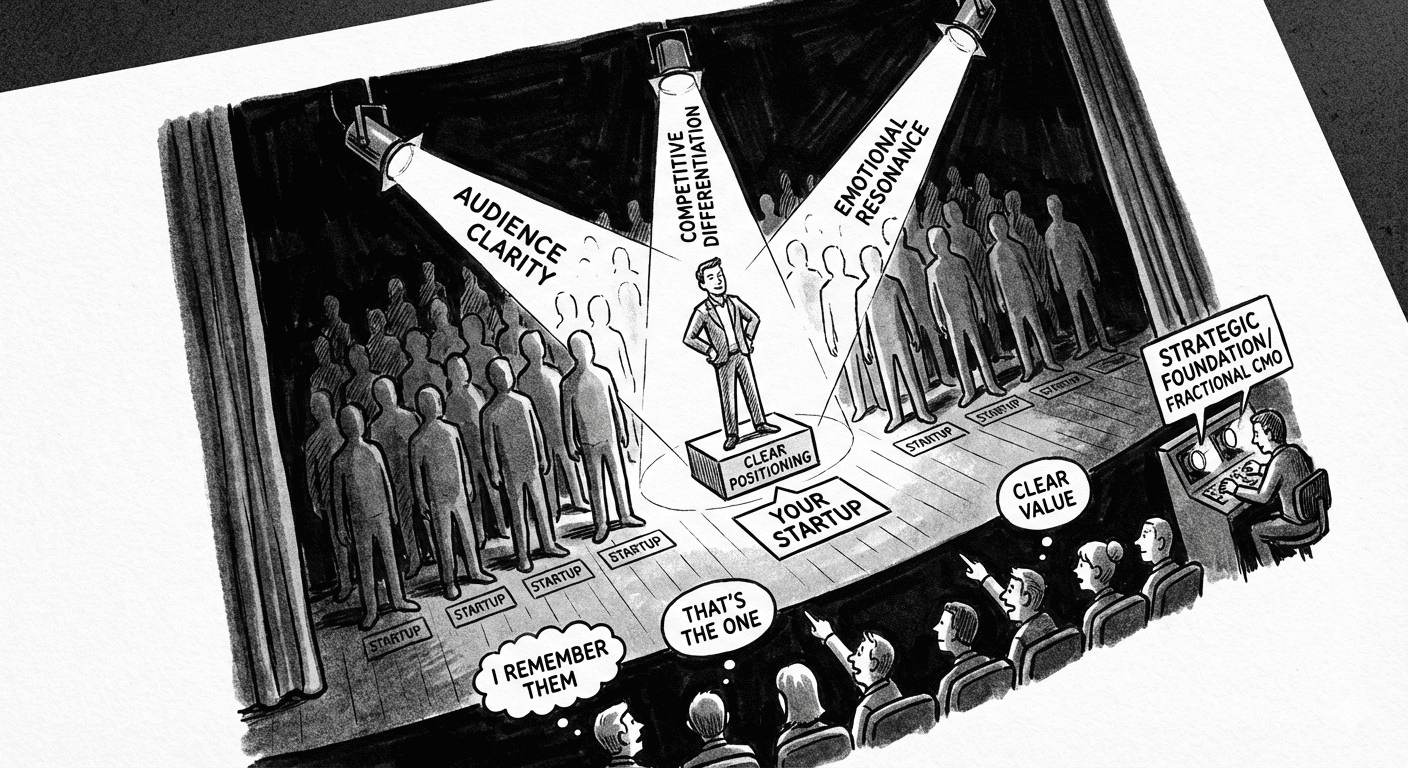
A strong positioning strategy blends three core pillars:
Audience Clarity – Who exactly are you speaking to?
Competitive Differentiation – What makes you different from anyone else?
Emotional Resonance – What do you make customers feel?
Think of Bumble. It wasn’t just a dating app — it was empowerment in action. While Tinder sold “connections,” Bumble sold “control.” That distinction transformed its market position entirely.
When startups focus on emotional value over features, they stop selling products and start selling beliefs.
IV. The Strategic Foundation: Aligning Vision with Market Needs
Brand positioning sits firmly in the strategic realm — the place where vision meets execution. It defines why your marketing exists, while tactics determine how it’s delivered.
To understand this difference deeply, explore Strategic Marketing vs Tactical Marketing — a critical framework for every founder defining brand direction.
When your strategic intent is clear, every campaign, message, and design choice moves in sync.
According to Forbes, brands with consistent positioning across channels enjoy 23% higher revenue and stronger loyalty.
That’s not a coincidence — it’s strategy in motion.
V. 5 Proven Brand Positioning Strategies for Startups
Let’s explore how early-stage companies can carve out their space in a crowded market:
1. Customer-Centric Positioning
Base your identity on solving real human pain points. Great startups listen more than they talk.
2. Price or Value-Based Positioning
Own your pricing story. Whether you’re the affordable disruptor or the premium choice, clarity beats confusion.
3. Innovation Positioning
Be the first mover or the fastest improver. Tesla didn’t just sell cars — it sold the future.
4. Cultural or Sustainability Positioning
Consumers crave meaning. Positioning around ethics, community, or sustainability builds emotional equity.
5. Convenience and Accessibility
If you make life easier or faster, say it boldly. Spotify won because it sold effortless discovery, not playlists.
Each strategy can evolve as your startup matures — but they all start with one question: Why should people care?
VI. Step-by-Step Guide: Crafting Your Brand Positioning Framework
A winning framework doesn’t happen overnight — it’s a deliberate, data-driven process. Here’s how to build one:
Audit Your Current Perception – What do customers really think of you?
Define Your Brand Essence – Identify your attributes, benefits, and emotional triggers.
Map Your Competition – Where’s the gap you can own?
Create a Positioning Statement – Example: “We help startups find clarity before they scale.”
Test and Evolve – Positioning should flex with your market, not fight it.
Many founders accelerate this process through expert-led Fractional CMO Services — designed to turn positioning insights into measurable, market-ready strategies.
VII. From Positioning to Performance: Turning Insight into Impact
Once your positioning is defined, the next challenge is bringing it to life through execution.
Every campaign, email, and pitch should reinforce that same promise. Integrating clear brand messaging across all touchpoints can increase lead quality by up to 36%, according to Demand Gen Report.
And when you’re ready to scale, tie your story to growth initiatives. For example, leveraging Product Marketing Services that Power B2B Growth ensures your brand positioning translates into real demand generation and pipeline impact.
VIII. Common Positioning Mistakes Startups Make
Even visionary founders fall into these traps:
Chasing trends without defining a core narrative.
Using vague messaging that fails to differentiate.
Ignoring customer feedback that could refine positioning.
Inconsistent tone across channels.
Treating marketing as execution, not strategy.
A seasoned team offering Fractional CMO Services helps avoid these missteps by aligning every initiative to your brand’s strategic foundation — not just short-term campaigns.
IX. Case in Point: From Idea to Identity
One early-stage HR tech company struggled to stand out despite great funding and a solid product.
After redefining its brand as “Purpose Driven HR for Business Outcomes”, lead quality increased 58%, and conversions rose by 20%.
That’s the power of consistent, emotionally anchored positioning — it turns visibility into value and curiosity into conversion.
X. The Future of Brand Positioning in a Digital World
The startup brands that will win in the next decade are those that feel human.
AI, personalization, and data insights are shaping faster evolution cycles, but authenticity remains timeless.
Your brand position is no longer what you say — it’s what customers experience.
In the digital era, clarity is your most scalable asset.
XI. Conclusion: Your Brand Deserves to Be Remembered
In a noisy marketplace, being known for something meaningful is your biggest growth multiplier.
If your startup is ready to build a brand that stands apart, not just ahead, it’s time to think strategically.
Partnering with a fractional CMO team helps you define, test, and scale your brand’s voice — with data, not guesswork.
Ready to position your startup for lasting success?
Book a consultation with Fractional CMO Partners — and let’s craft a brand that leads, not follows.
FAQs: Brand Positioning for Startups
1. What is brand positioning for startups?
Brand positioning defines how your target audience perceives your startup compared to competitors. It’s your brand’s identity in the customer’s mind — built through messaging, value, and experience.
2. Why is brand positioning important for early-stage startups?
It helps startups establish trust, attract investors, and differentiate early. Without clear positioning, marketing efforts often lack direction and consistency.
3. How do I know if my startup’s positioning is effective?
Track engagement metrics, conversion rates, and customer sentiment. If your target audience can clearly describe your unique value, your positioning works.
4. Can I change my brand positioning later?
Yes. Positioning evolves with your market and customer base. A fractional CMO can help realign your positioning as your business scales.
5. What’s the difference between brand positioning and branding?
Branding is the visual identity (logo, design, tone), while brand positioning is the strategic foundation — the “why” behind your image and story.
6. How can a Fractional CMO help my startup with brand positioning?
A Fractional CMO brings senior-level expertise at a fraction of the cost. They develop frameworks, analyze competitors, and build positioning strategies aligned with long-term growth.